_edited.png)
Achieving Sub-Micron Precision: Integrating 3D Vision for a 17-Thou Needle Assembly

In today’s manufacturing landscape, maintaining high quality is not just a goal but a necessity. Automated quality control has become a cornerstone for industries such as electrical, aerospace, defense, medical, and life sciences. These sectors demand precision and reliability, and manual inspection methods often fall short in meeting these standards consistently. This is where advanced technology steps in, transforming quality assurance processes and enabling manufacturers to achieve superior results.
The Engineer's Headache
In medical device manufacturing, miniaturization is pushing the physical limits of standard assembly lines. When you are tasked with inserting a 0.016-inch wire into a 0.017-inch needle ID, there is zero margin for error. If your system cannot perfectly calculate spatial orientation, you are guaranteed to experience collisions, false rejects, and destroyed components.

The Legacy Failure
Standard off-the-shelf integrators typically try to solve this with 2D cameras. But 2D vision operates on a flat X-Y plane. It cannot read depth, and it severely struggles to detect the Z-axis orientation of highly reflective, microscopic stainless-steel components. Trying to guide a robot with a 2D camera in a 3D environment is essentially assembling parts blindfolded.
The SEYMOUR Solution: 3D Vision Integration.
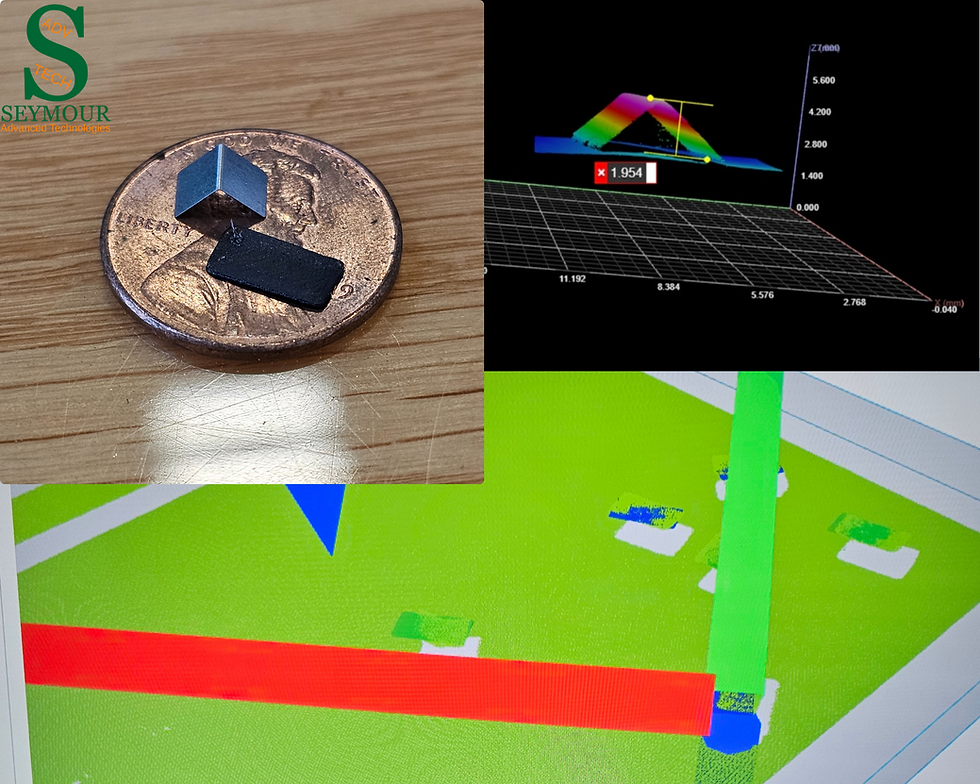
At SEYMOUR Advanced Technologies, we abandon 2D guessing games. For our TRI-21 ophthalmic assembly system, we integrated LMI Gocator 3D Smart Sensors directly with Mecademic robotics. By utilizing our SmartSEY vision platform, the camera generates a high-density 3D point cloud of the parts. It calculates thickness, length, and straightness, and applies sub-micron path correction to the robot before the insertion sequence begins.

The Hard Data
By actively guiding the robot in true 3D space, SEYMOUR successfully navigated a 60-micrometer clearance window (1/25th the width of a human hair) at high speeds. The result was a 400% increase in productivity while maintaining 100% FDA-compliant sterility and a flawless digital thread of quality data.

Comments