_edited.png)
How Do Robots Assemble Products? A Guide to Precision Automation


When most people think of robotic assembly, they picture massive, sparks-flying robotic arms welding car chassis on a conveyor belt. While that was the reality of 20th-century manufacturing, today's industrial robotics look entirely different.
In high-stakes industries like medical device manufacturing, aerospace, and advanced electronics, parts are microscopic, and the margin for error is zero. So, how exactly do modern robots assemble these complex, sub-micron products? It all comes down to a synchronized dance between vision, mechanics, and modular engineering.
The Anatomy of Modern Robotic Assembly
To understand how robots build products, you have to look at the core components that make up custom automation solutions. A modern assembly cell functions very much like a human worker, but with infinite repeatability.
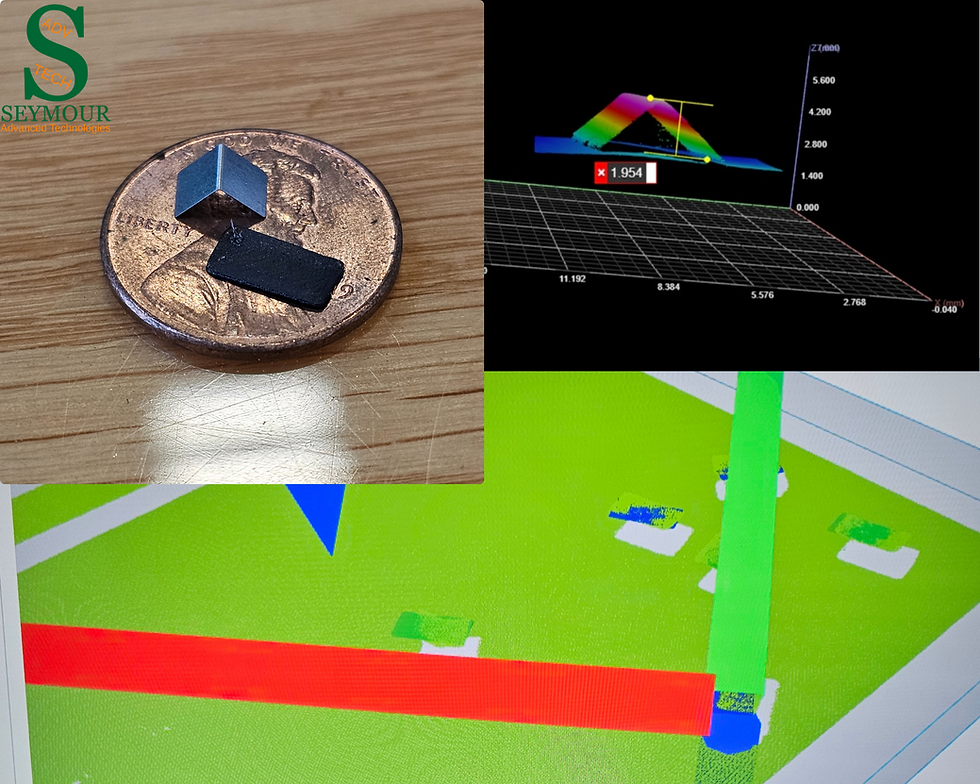
The Eyes (3D Vision Systems): A robot cannot assemble what it cannot accurately see. Advanced systems use 3D cloud vision—like our SmartSEY technology—to scan a part's exact depth, shape, and orientation in real-time. This prevents the robot from blindly crashing into parts that are slightly out of alignment.
The Brain (The Controller & SCADA): This is the software that processes the 3D images and calculates the exact dynamic path the robot needs to take to pick up and place the component.
The Hands (End-of-Arm Tooling): These are the highly customized grippers, vacuum nozzles, or micro-soldering tips that physically manipulate the product.
The Supply (Smart Feeders): Before a robot can assemble a product, the parts must be fed to it. Technologies like tuned-mass micro-screw feeders ensure that microscopic parts are delivered smoothly without jamming.

When a product enters one of our modular production cells, it goes through a highly orchestrated sequence:
1. Vision-Guided Localization: Flat 2D cameras are no longer enough. The 3D vision scanner locates the exact coordinates of the parts (down to the micron) and sends that data to the robotic arm.
2. Precision Manipulation: Using 6-axis robotic arms, the system picks up the component. Because the pathing is dynamic, the robot adjusts its trajectory on the fly to match the exact orientation of the part.
3. Fastening and Joining: The robot executes the assembly. This could involve inserting a 16-thou wire into a 17-thou medical needle, dispensing precise amounts of Loctite, or driving a #0-60 micro-screw with dual-redundancy torque validation.
4. Automated Quality Inspection: Assembly isn't finished until it's verified. The 3D vision system immediately inspects the final joint, solder, or seal to ensure 100% compliance before the product moves down the line.

Why Manufacturers are Moving to Modular Production Cells
Historically, automating an assembly line meant building a massive, rigid, multi-million dollar machine. If your product design changed, the machine became obsolete.
Today, the industry is shifting to modular production cells (like the FlexSEY platform). These modular units act as flexible building blocks. You can deploy a single robotic cell to automate your most difficult bottleneck (like micro-soldering), and as your commercial volume grows, you can seamlessly integrate additional cells. It bridges the gap between manual R&D assembly and high-volume commercialization without the massive upfront CapEx risk.
Ready to Automate Your Assembly Line?
Whether you are trying to eliminate the "10-hour shift drift" or you need to scale up your medical device production to 10,000 units a month, you need a partner who understands precision.
At SEYMOUR Advanced Technologies, we provide the custom automation solutions that take your manufacturing from the lab to the commercial floor.


Comments